
Share Courtney B. Cazden's obituary with others.
Invite friends and family to read the obituary and add memories.
Stay updated
We'll notify you when service details or new memories are added.
You're now following this obituary
We'll email you when there are updates.
Select your format and elements to print

IN LOVING MEMORY OF Courtney B. Cazden
Courtney B.
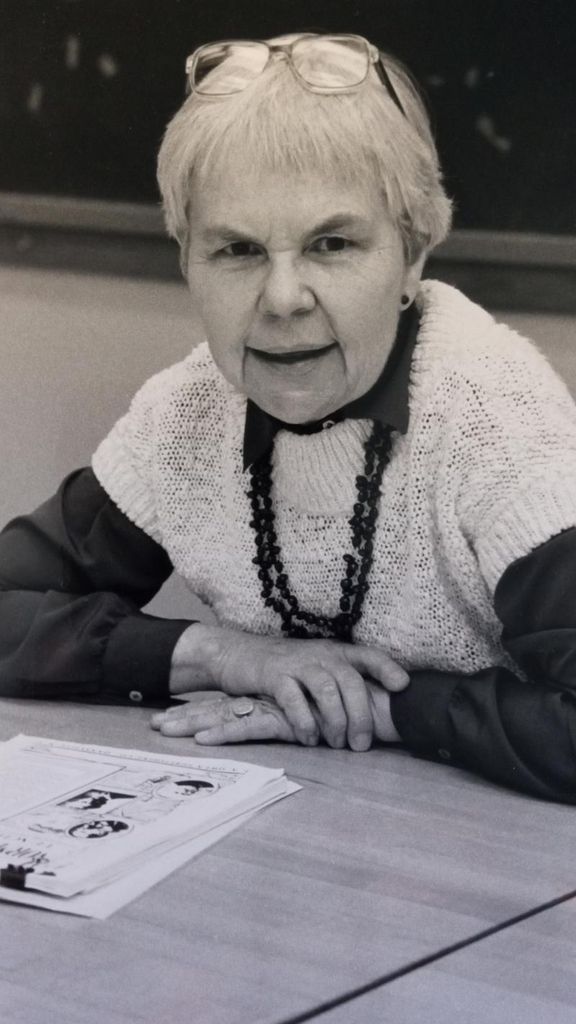
Cazden
d. Dec 25, 2025
Courtney B. Cazden's Obituary
COURTNEY BORDEN CAZDEN
November 30, 1925 - December 25, 2025
Courtney Borden Cazden passed away peacefully on Christmas morning, in the nursing unit at Brookhaven Retirement Community in Lexington, MA. She had recently celebrated her 100th birthday, a long-standing goal and the final item on her to-do list.
Courtney was born in Chicago in 1925. Her parents were part of the smart social set on Chicago's "Gold Coast." They also spent time at her father's showcase farm on a repurposed plantation in Grenada, MS, and at the Borden family's shorefront "summer cottage" in Camden, ME. In 1933 her parents divorced and both quickly remarried. Courtney remained in Chicago with her father and a new much-younger stepmother. She attended a private girls' school. But her father's financial fortunes, already shaky, gradually forced changes in the family's lifestyle. At age 14, as her father's growing family prepared to move from Chicago to Michigan, Courtney chose instead to remain with an aunt and uncle in Maine. She later said that she "walked out of my father's [right-wing] politics as well as his alcoholism, and into the pro-Allies atmosphere of making bandages for Britain in the local parish hall." She graduated from Camden High School (Class of 1942). A great-aunt paid for her to attend Radcliffe College.
At Radcliffe Courtney met Norman Cazden, a music graduate student at Harvard. The son of socialist Jewish immigrants from Russia (now Belarus), Norman had studied at Julliard and the City College of New York, where he got to know Charles Seeger (Pete Seeger's father) and fellow composer Aaron Copeland. Norman introduced Courtney to Camp Woodland, a left-wing summer camp in the Catskills, where he served as music director and folklore collector. She liked it immediately, and camp director Norman Studer became an important mentor who helped guide her into teaching. She saw the camp as a living example of how education could promote a just and inclusive society. Norman and Courtney were married in February 1946, as soon as she graduated from Radcliffe.
The couple moved to New York City, where Norman completed writing his dissertation while Courtney earned her teaching credentials at Bank Street College of Education. She taught in Bethesda, MD, while Norman had a short-term teaching position nearby. But they wanted to start a family, and schools would not allow pregnant teachers in the classroom. Their first child was born in 1950 in Ann Arbor, MI, where Norman held a one-year appointment at the University of Michigan. They then moved to Champagne-Urbana for a tenure-track position at the University of Illinois, and their second child was born there in 1952.
During these years Courtney, while raising two small children, was politically active in the campaign against the Illinois Broyles Bill, which threatened to require a loyalty oath for public school teachers, and the whole family marched in demonstrations seeking clemency for Ethel and Julius Rosenberg. In 1953, the University declined to renew Norman's contract due to the McCarthy blacklist, a major blow to his career plans. The family moved to be near his family in Bridgeport, CT, and Courtney became the primary salary as a first grade teacher in an ethnically diverse working-class school in nearby Stratford. Norman worked from home, teaching piano, composing, and conducting folklore research. They again spent summers at Camp Woodland (a haven for blacklisted families), Norman as music director and Courtney as director of Junior and Middle Camp, while the children started as campers as soon as they were (barely) old enough. Courtney organized expeditions for the family into New York City to the Bronx Zoo, the Planetarium, and performances of the Nutcracker Suite, and Christmas trips to Camden, ME.
In 1961 the family moved to the Boston area, where Courtney enrolled in a doctoral program at the Harvard Graduate School of Education. During these years Norman continued to work from home as a piano teacher, composer, and folklore researcher. Both daughters joined him in Lexington's robust music programs. When the younger child finished high school in 1969, the marriage ended. Norman moved to the University of Maine (Orono) where he taught until his death in 1980. Courtney's research focused on language differences, social class, and cultural diversity, combining linguistics, psychology, ethnography, and education. When she completed her degree in 1965, Harvard immediately hired her as faculty. A few years later she became only the 13th woman to receive tenure in the entire University, and would remain there for the rest of her career.
Courtney's teaching, research, and writing focused on language, literacy, classroom talk, and bilingual education, especially how to help children preserve their Indigenous or African diaspora language and culture while learning the skills to function well within the dominant society. She never forgot what it was like to be a teacher. In 1974 she took a one-year leave from Harvard to teach first grade in a majority-minority school in San Diego, to see how her theories held up in practice. It was harder than she expected. She and a research colleague wrote about what she'd learned from the other teachers and from her own experience. Throughout her teaching and research work, she strongly championed the autonomy and reflective work of teachers and supported teachers as co-thinkers in any way she could. She spent decades traveling and working alongside local educators in the Navajo Nation, Alaska native villages, New Zealand Māori communities, Singapore, and Australian Aboriginal communities. She served as an early literacy consultant to the Sesame Street project. Her work always reflected a commitment to making a tangible difference for students and teachers, particularly those in the least advantaged communities.
From 1986 to 2003 Courtney also spent numerous summers teaching at the Bread Loaf program in Middlebury, VT, and satellite programs in Juneau, Alaska; Santa Fe, New Mexico; Oxford, UK, and South Africa. At Bread Loaf she became acquainted with and an avid supporter of the resident company of Trinity Repertory Theater in Providence, RI.
Courtney's professional work was recognized by a number of professional organizations, including Bank Street College of Education, the National Council of Teachers of English (NCTE), the American Educational Research Association, the National Reading Conference, and the African, Latino, Asian, and Native American Advisory Council (ALANA) at the Harvard Graduate School of Education. Her colleagues, including former students in schools and research institutions around the world, valued her transformative work using sociolinguistic analysis to examine classroom dynamics, especially in bilingual and bicultural settings. In 1995 Courtney was named the Charles William Eliot Professor of Education. She retired the next year, at age 70, but maintained an active professional life for another 20 years, including extensive consulting work on Indigenous education in Australia, New Zealand, and Singapore, always working closely with teachers and young people in schools and communities.
Courtney's teaching, mentorship, and writing influenced a generation of educators. Her students and colleagues (and family) knew she could give direct criticism – what one called "equal-opportunity brusqueness" – but was also generous with encouragement, recommendations, and collaboration. Her co-edited collection Functions of Language in the Classroom (1971) is considered a landmark work in educational research, bringing together work on ethnography, marginalized communities, linguistics, and classroom dynamics. Her book Classroom Discourse (1988, 2d ed. 2001), translated into multiple languages, remains an important resource on how teacher-student interactions within primary school classrooms can either foster or undercut inclusion and honoring of children's languages and cultures of origin. Whole Language Plus: Essays on Literacy in the United States & New Zealand (1992) compiled Courtney's essays written over the years, some in collaboration with other literacy researchers, each with commentary placing the essays in their historic and academic context. Her final book, Communicative Competence, Classroom Interaction and Educational Equity: The Selected Works of Courtney B. Cazden (2018), contains her selection of key essays written over a half century.
After dismissing those who were always showing off grandbaby pictures as "women who need a life," once Courtney became a grandmother in her mid-50s, she quickly became devoted to her grandchildren. She frequently visited their home in Manchester, New Hampshire, and hosted each child on solo trips into Boston, to the Children's Museum, the Museum of Science, or simply to ride the T to explore. She accompanied the family on canoe trips and a 1994 trip to England. She faithfully attended their concerts, sporting events, and graduations from high school, college, and medical school, and remained an active part of their adult lives.
Courtney loved international travel, whether for professional conferences or sabbatical work or out of personal interest. She accompanied an older friend to India, where the friend had grown up and raised a young family. She spent sabbatical semesters in Auckland, New Zealand, and Lancaster, UK. She toured China, Cuba, South Africa, and Russia. She visited every continent except Antarctica. Her apartment was full of posters, sculpture, books, maps, and other mementos of her travels. In her later years Courtney enjoyed group tours organized by Road Scholar, Trinity Repertory Theater, and The Nation magazine, including to Ireland, Germany, Istanbul, the former Yugoslavia, Iran, and Spain & Morocco. She would read extensively on the social history and conditions in each destination. Her final two trips, in her '90s, were to South Africa and to civil rights sites in the southern United States.
Courtney joined Friends Meeting at Cambridge (Quaker) in the 1970s, attracted by Quakers' commitment to peace and social justice. She served in many volunteer capacities within the American Friends Service Committee, including as Clerk of the New England Regional Executive Committee. She also worked with Cambridge Friends School. She attended sessions of New England Yearly Meeting during the 1990s, primarily to assist with childcare of her young grandchildren.
Courtney moved from Cambridge to the Brookhaven Retirement Community in Lexington in 2005. At Brookhaven she was a regular early-morning exerciser in the fitness center, followed by coffee and arranging the daily newspapers in the library. As long as her health permitted (and until Covid restrictions interfered), she enjoyed trips into Cambridge/Boston to see plays or exhibits and meet friends, and Brookhaven's group excursions to art museums and restaurants. She also continued to travel, sometimes with her daughter. She remained engaged and curious, keeping up with political issues and learning new things well into her 90s. For example, she went to see the hip-hop movie 8 Mile and then was eager to explore the differences between rap and hip-hop. During her last few years, as her health and memory faded, Brookhaven staff provided crucial support to keep her comfortable and as active as possible.
Courtney is survived by two daughters, Elizabeth (Betsy) of Providence, RI, and Joanna (and husband Scott Wilkinson) of Santa Cruz, CA; two grandchildren, Dr. Sarah Kleinschmidt of Amherst, MA, and David Kleinschmidt (and wife Faith) of Madison, OH; one brother, Robert Borden; and numerous cousins, nieces and nephews.
Memorial contributions can be sent to the Friends Committee on National Legislation (FCNL); the Rosenberg Fund for Children; the Ramallah Friends School; or progressive Democratic candidates.
A memorial meeting will be held at Friends Meeting at Cambridge (and via Zoom) on Saturday, February 28, at 10:30 am ET.
Courtney B. Cazden's Guestbook
Visits: 0
This site is protected by reCAPTCHA and the
Google Privacy Policy and Terms of Service apply.
Service map data © OpenStreetMap contributors